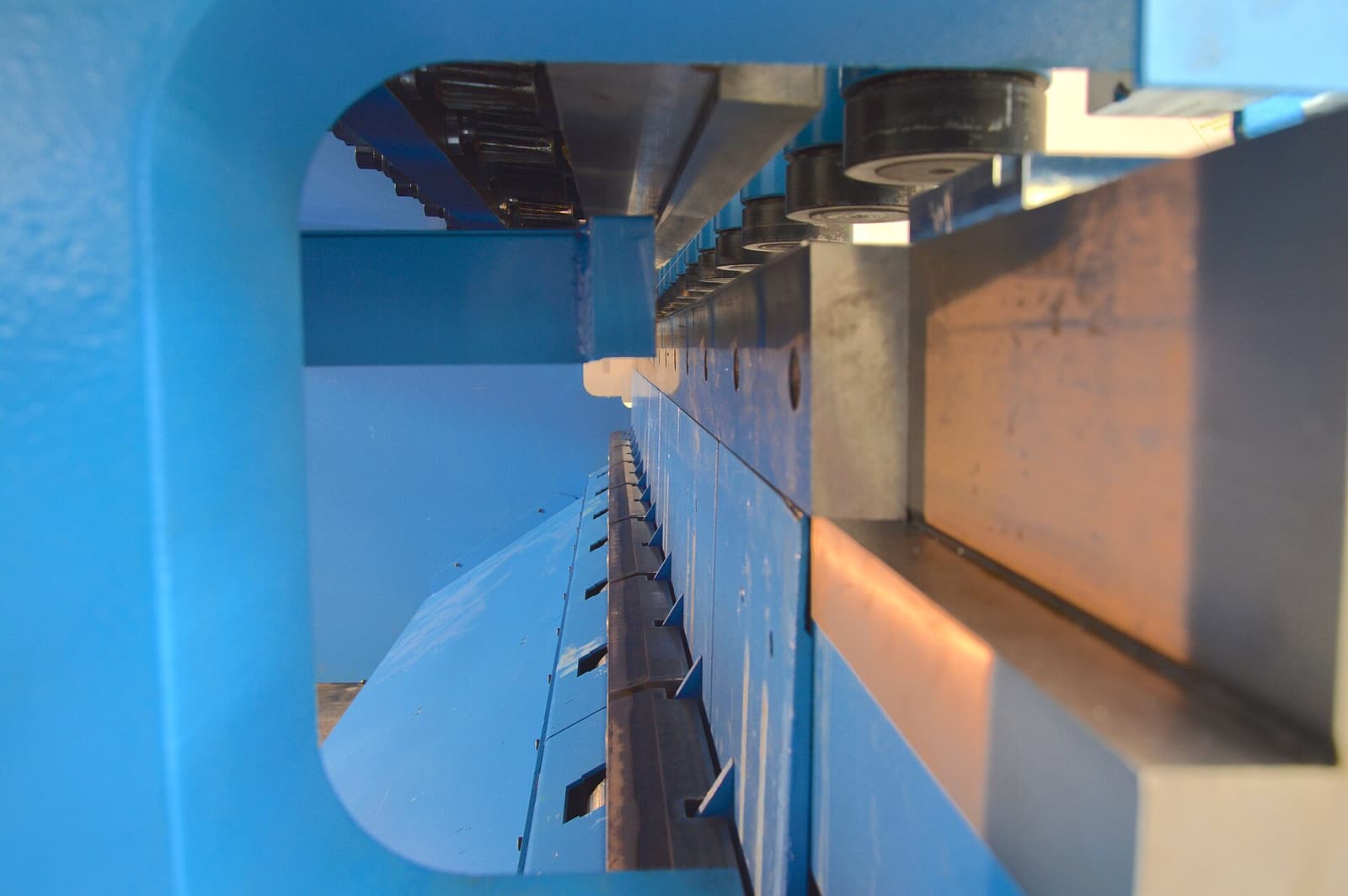

Site cuts are how good sheet becomes a complaint. The old Melbourne shop existed because a factory shear with a ±2 mm habit still beats a grinder on a balcony. Sometimes you still have to cut on the job. Do it like you mean the rest of the metal to survive.
This journal does not sell a shear and it will not write a full WHS manual. It will say: the shop processes you are imitating have names — guillotine, laser, waterjet — and a site grinder is not any of them.
If the cut list is long, stop. Send it back to custom-cut stainless in Australia and let a shear be a shear.
What you are trying to imitate
Australian custom-cut blanks come off merchant parents — typically 2400 × 1200 mm, with 3000 × 1500 and 3600 × 1500 depending on thickness, grade and finish. The shop cut is usually a guillotine. Laser and waterjet enter when the nest is intricate or the edge is seen.
| Process | Where it belongs | Edge and heat | Tolerance habit | Site equivalent |
|---|---|---|---|---|
| Guillotine / shear | Shop blanks | Cold sheared arris | Historic ±2 mm | Electric shear, if you have one |
| Laser | Shop profiles and openings | Heat-affected kerf | Tighter if specified | None. Do not pretend a grinder is a laser |
| Waterjet | Shop, especially thicker plate | No heat tint, frosted kerf | Can be tight | None on a balcony |
| Nibbler | Shop or site openings | Scalloped, cooler than a disc | Roughly neat | The honest site tool for holes |
| Angle grinder | Last resort | Hot, burnt, spark shower | Whatever the hand did | The complaint generator |
A cut edge is not an extrusion. The old catalogue already said that about factory cuts. A site cut is less extruded than that.
Tool choice
- Tin snips / aviation snips — thin sheet, short cuts, ugly edges. Fine for a 0.9 mm cover that nobody will see.
- Nibbler — kinder to the finish, scalloped edge, good for openings. The honest site tool when a hole appeared after the sheet was installed.
- Shear (electric or workshop) — the correct tool for blanks. If you can take the sheet back to a shear, do that.
- Circular saw with a stainless blade — long cuts, clamp well, mind heat. Support the sheet so it does not flap and pinch the blade.
- Angle grinder — last resort on visible work. Stainless-rated disc only. New disc if it has seen carbon steel. Dress the burnt edge.
Plasma and oxy belong in a different essay and a different level of fume control. This page is kitchen and architectural sheet — the thicknesses on the thickness chart, not a 20 mm plate.
Clamps are part of the tool list. A polished 316 sheet on a milk crate is how you write off a parent. Support both sides of the cut. Film stays on if the tool will allow it; peel a strip along the line rather than stripping the whole face. Protecting stainless during install is the sister procedure.
Contamination
Swarf is the villain. It sits on a 316 rail and rusts, and the client blames the alloy. The rust is carbon-steel dust, or stainless dust sitting in a wet crevice, or a shared disc that already cut galvanised studs.
Mask finished work. Vacuum, do not broom into a wet corner. Change gloves after handling carbon steel. Dedicated stainless discs, blades and pads. If the last job was galvanised or aluminium, treat the tool as dirty until you have changed the consumable.
Heat tint on a cut edge is a corrosion site. Dress it. A rainbow edge on coastal 316 is a stain that has not happened yet. If you welded as well, passivate. A flap disc that already dressed a carbon-steel lintel is not a finishing tool.
Neighbours and the next bay
Site cuts happen in rooms that already contain finished metal. A splashback trim throws sparks onto a No. 4 bench. A balcony trim throws dust onto someone else’s balustrade. Mask, extract, and clean before you leave. Brown specks that appear a week later are still your swarf.
304 versus 316 does not save you. 316 stained with carbon dust photographs the same as 304 that was the wrong alloy. The client will not enjoy the chemistry lesson.
Tolerance, finish and grain
A site cut will not look extruded. If the edge is a feature, stop. Send a drawing to a counter.
Shop language is ±2 mm on a sheared blank. On site you should not promise that number. Leave metal if you can, then dress to the line. A cut that is 3 mm short is a new sheet. A cut that is 3 mm long is a second chance.
Finish decides how public the edge is. A mill 2B liner can forgive a nibbled opening. A No. 4 bench will show a scalloped cut at the upstand. A BA or No. 8 face will show everything — see finishes explained and brushed versus polished.
Grain direction is easier to respect on a shop nest than on a balcony with a breeze. If you must rip a No. 4 splashback, cut parallel to the grain if the drawing allows it. A cross-grain slash through a long run reads as a repair.
Thickness matters. 1.2 mm kitchen sheet is snippable and nibbleable. 2.0 mm and 3.0 mm want a shear. Plate wants to go back to the shop. Do not freehand a 3 mm kickplate with a thin disc and call it custom-cut.
Folds you should not invent on site
A site cut is sometimes a prelude to a site fold. A folding tool on a bench can turn a blank into a small angle or a light channel. A hammer over a timber arris is how you stretch one leg and split the PVC.
The old folder published smallest-leg notes and a radius at every bend. Those notes still apply when the folder is a hired brake on a driveway. Thicker sheet needs more leg. Internal versus external still matters.
If the part was always a folded section, it should have been a custom-cut line item, not a site invention.
Safety, briefly
Stainless grinding fume is not a lifestyle brand. Use extraction and the PPE your state workplace page names. This journal will not invent a WHS manual. It will say: do not freehand a polished 316 sheet on a milk crate, and do not share a carbon-steel disc “just for a trim.”
Hot swarf starts fires in film offcuts and in insulation. Have somewhere for the sparks to go that is not the client’s joinery.
When the cut list is long, go back to custom-cut stainless in Australia and let a shear be a shear. The custom-cut and sections hub is the family page. The sheet, plate and finishes hub is where the face you are about to scratch was specified.