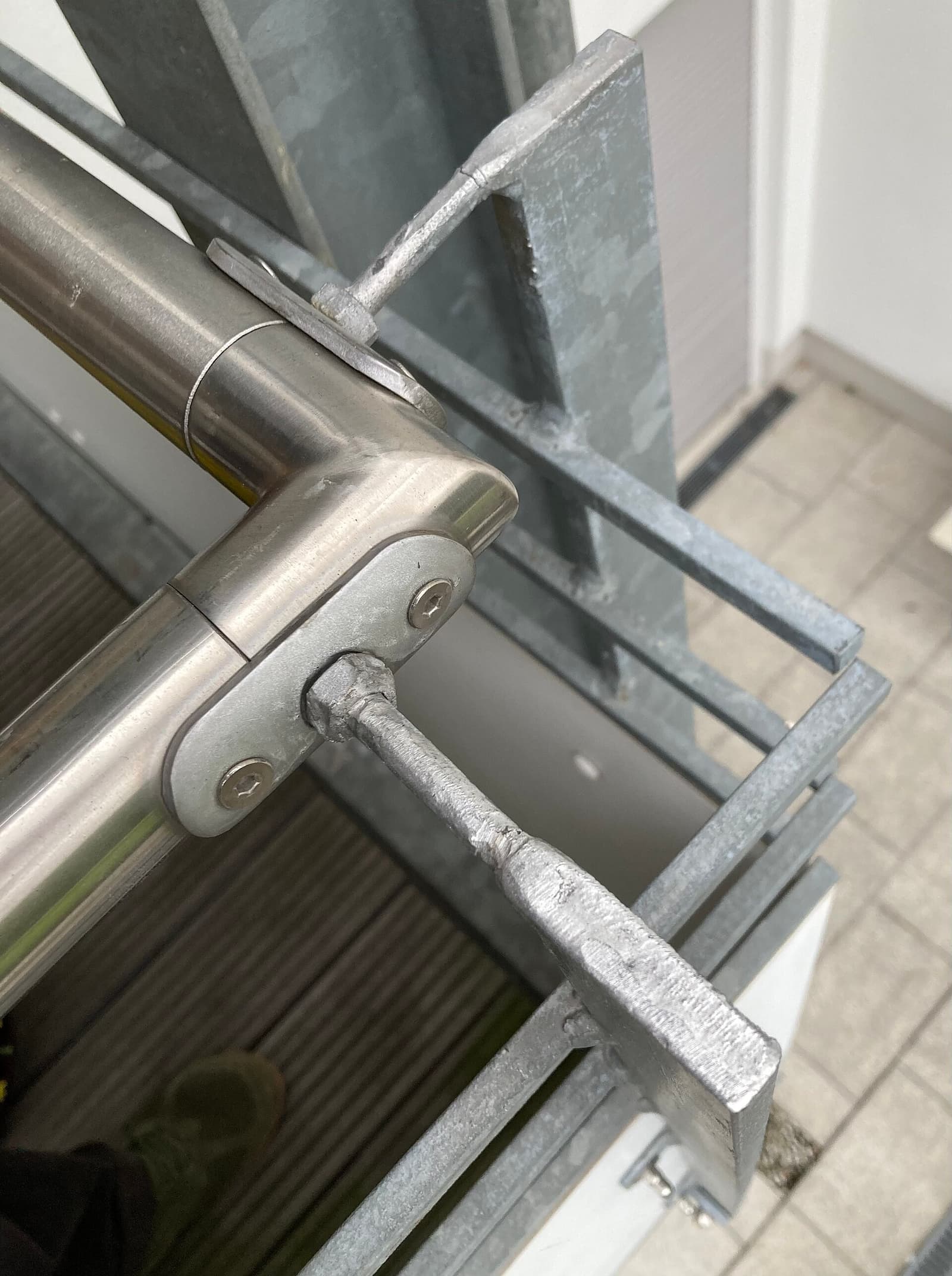

The historic shop sold 50.8 × 1.5 mm, grade 316, 320-grit polish, unslotted for a handrail, slotted for glass, posts with a welded base. That is a product description. A balustrade is a barrier. This journal will describe the metal. It will not stamp a building.
Australian coastal chlorides, pool chemicals, and suburban salt-laden wind are why the old Melbourne custom-cut counter pushed 316 on outdoor rails. ASSDA’s architectural notes and Atlas-style 316 grade data sit under that habit. The National Construction Code and the standards your building surveyor names sit under the height, the load, and the opening. Confusing those two jobs is how a pretty post becomes a defect.
We do not sell tube and we do not certify barriers. Read marine-grade language if the docket still says a nickname. The marine, balustrade and outdoors hub collects the rest of this duty.
The metal specification
- 316L tube and posts outdoors, especially coastal.
- A finish you can wash — 320 grit is common; a No. 8 is a maintenance contract. See finishes 2B, No. 4, BA, No. 8.
- A4 screws and anchors — A2 versus A4.
- Drained base plates. A cup at the foot is a tea-stain machine.
- Passivation after welding.
Marine grade on a docket that does not say 316 is a story. 304 versus 316 is the alloy decision; this page is the assembly that lives on a slab edge.
Chemistry: why the rail is 316L
316 carries molybdenum that 304 does not. That increment is why a coastal post specified in 304 can look tired after one summer of unwashed salt film. 316L is the low-carbon version you should name if the posts are welded — sensitisation in the heat-affected zone is a real mechanism, and welding 304 and 316 is the filler and tint essay.
316 is still an austenitic. It is not duplex. It is not seawater armour. Immersed or plant chloride duty belongs in duplex versus 316. A balcony that gets hosed is architectural. A shaft in a pump is not.
430 is magnetic and indoor. If a magnet sticks hard to a “316 post,” identify the grade before you argue about polish.
| Piece | Write this | Do not write this |
|---|---|---|
| Tube / post | 316L, OD × wall, finish | Marine grade tube |
| Fasteners | A4-70 (or specified class) | Stainless screws |
| Base | Drained, sealed as designed | A cup that ponds |
| Weld | 316L filler, tint removed, passivated | Leave the rainbow |
| Infill | Slotted for glass, unslotted for rail | “Whatever is in the rack” |
Australian duty: coast, pool, inland, food-adjacent
Coast
Treat 316L as the default from surf suburbs to any balcony that eats salt wind. Coastal care is washing, not wax poetry. Horizontal rails and base plates that pond will stain genuine 316. Design is part of the grade.
Pool
Chlorinated water and splash are a chloride duty with their own fence rules. Pool fences are not a blog specification. The metal still wants 316L and A4 if it is stainless. Carbon swarf from a site cut will rust-speck overnight.
Inland
A dry regional town is not Bondi. 304 outdoors can be honest if the designer accepts the atmosphere and the client accepts more staining risk. Do not mix 304 remnants into a coastal run because the lengths matched.
Near kitchens
A rail that is also a pass at an open coastal kitchen is still a 316 job. Food-grade language does not specify a barrier. It specifies a cleanable alloy and finish for contact surfaces.
Glass, slots and water
Slotted tube holds glass and dirt. Weep paths matter. Interlayers and edge conditions are glazing, not stainless. Do not let a glazier’s carbon-steel blade dress a 316 slot.
Dirt in a slot is a crevice. Salt in a slot is a crevice with an agenda. A wash programme that cannot reach the slot is not a programme. Specify how the water leaves.
Unslotted tube is the handrail and picket story the old catalogue already split out. Pickets need the same alloy and the same fastener discipline as the posts. One magnetic picket in a non-magnetic run is a mixed bundle, not a style choice.
Loads and law
Barrier design sits in the National Construction Code and the standards your building surveyor names (loads, heights, openings). Pool fences have their own rules. A pretty 316 post in the wrong height is still a defect.
This journal will not pick your infill spacing, your post centres, or your fixing into masonry. 50.8 × 1.5 mm is a common product, not a certificate. If the section is a folded channel pretending to be a post, hire a designer. If the glass is structural, that is a glazing and barrier job, not a polish job.
Failure modes
Tea staining on correct 316. Rough polish, horizontal face, no wash. Clients photograph rust. ASSDA documented this years ago. Change the design and the care, not necessarily the alloy.
304 sold as marine. Paperwork missing, stain arriving early. Identify before you polish away the evidence.
A2 screws. Brown at every hole. The cheapest undo.
Heat tint left on the weld. A corrosion line you paid to install. Dress and passivate.
Swarf from a site cut. Flash rust specks that look like pitting. Dedicated abrasives; clean before handover.
Ponding bases. A cup at the foot. Drain it.
Barrier geometry wrong. Correct metal, illegal height or opening. The surveyor does not care about your mill certificate.
Duplex theatre. A quote that jumps to 2205 on a domestic deck without an engineer. Ask why 316L left the room.
Care after handover
Coastal care is fresh water and a neutral detergent on a schedule the building can keep. Not bleach. Not brickie acid. Not steel wool. Site cuts throw swarf; a new rail can rust-speck overnight if someone dressed a slot with the wrong wheel.
Write the care note into the handover. A brochure in a drawer is not a wash. If staining returns in stripes, check mixed metals and residual iron before you accuse the mill.
How to order
A usable paragraph: “316L tube 50.8 × 1.5 mm, 320-grit polish, slotted / unslotted as drawn, 316L posts with drained bases, A4 fasteners, 316L filler, passivate after fabrication, mill certificates retained, coastal balcony — barrier design by others under the NCC.”
That sentence does more work than “marine grade balustrade, polished.” Name the environment. Name the finish you will wash. Keep the heat numbers. Identify at purchase, label the remnants, and do not let a 430 offcut become a picket.
If the alloy is still being argued, return to 304 versus 316. If the nickname is still on the quote, return to what marine-grade means.