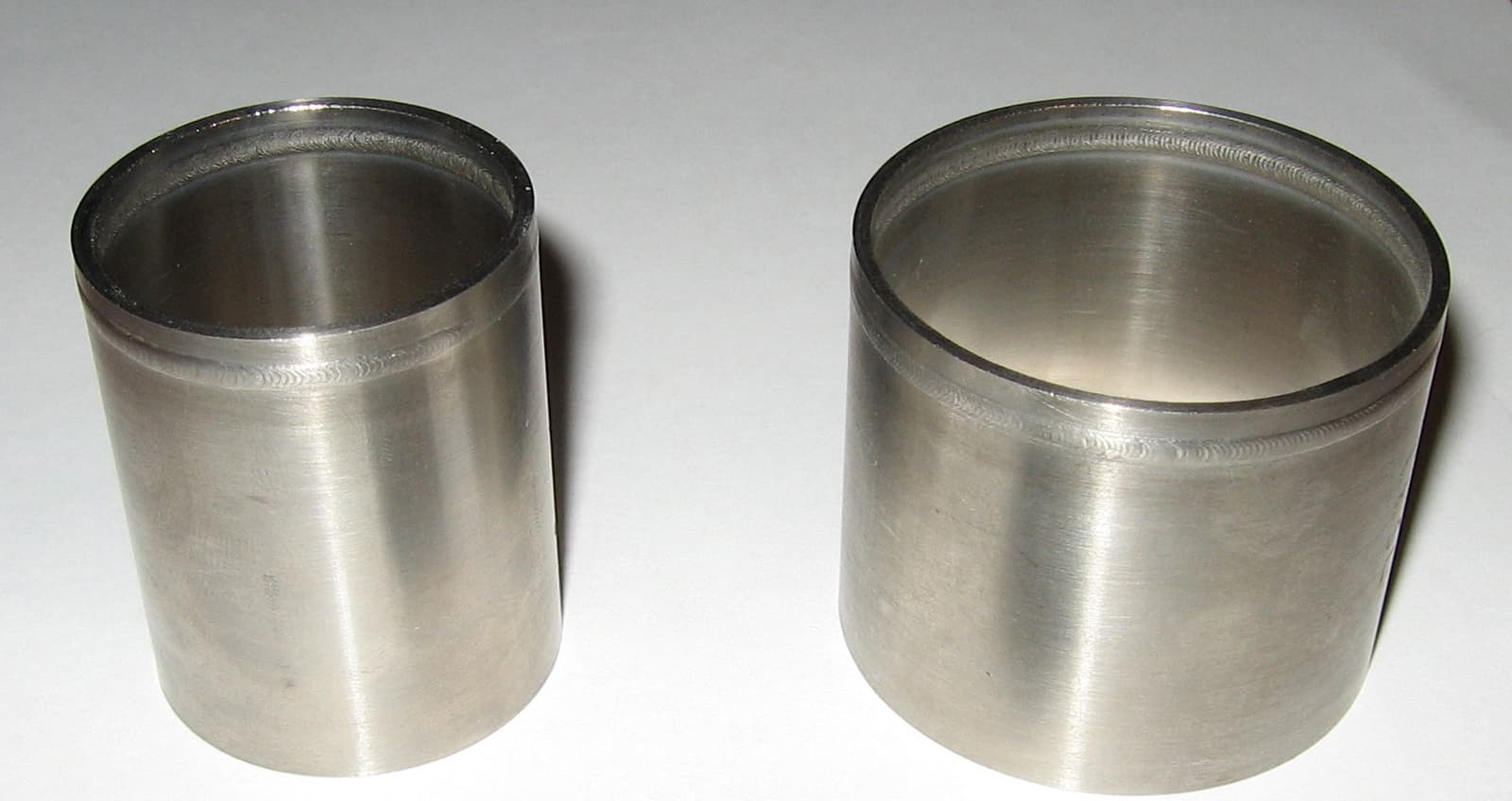

Stainless stays stainless because chromium meets air and builds a thin oxide. Fabrication strips that film: heat tint, embedded iron, a pickled edge that was never rinsed, a grind that smeared carbon steel. Passivation is the planned rebuild. Pickling is the heavier cousin that removes scale first.
This is shop chemistry, not a lifestyle rinse. Read the product SDS. This page will not give you a homemade acid recipe. It will tell you when the job is part of a grown-up fabrication and care sequence, and when a filmed blank only needs detergent at peel.
What the film actually is
The passive layer is a thin chromium-rich oxide. It forms in air on clean stainless. It is not paint and it is not a coating you can see on a No. 4 bench. Heat, reduction in a weld puddle, embedded free iron, and chloride attack all interrupt it.
Welding 304 and 316 makes tint — oxidised metal that is no longer a healthy passive surface. Grinding can smear carbon steel into the face. A shear is gentler, but a carbon-steel blade or a rusty bed still plants iron. Protecting stainless during install is how you avoid manufacturing work for the passivation bay.
Passivation, in the shop sense, is a controlled oxidising clean that helps the chromium oxide rebuild and can dissolve free iron. It is not a polish. A mirror can still be active with iron in it. A dull HRAP flat bar can be properly passive.
When it is part of the job
- After welding 304 or 316, especially outdoors or in food plant.
- After heavy grinding or a site cut that left tint.
- On coastal balustrades before handover.
- On hygienic tables where tint is a dirt line.
A filmed custom-cut blank that never saw a grinder may only need detergent at peel. Do not ritualise chemicals on work that does not need them — and do not skip them on a 316 marina ladder.
Folded angle and channel collect pickle residue in the internal corner if you flood and forget. Rinse the U. A crevice full of acid is a pit you scheduled.
Site welds are the ones that get skipped. The shop passivated the frames; the installer TIG’d a base plate on the slab and walked away. That bead is now the first tea stain in the photo. Budget the site step, or weld in the shop.
Pickle versus passivate
Pickling (often nitric/hydrofluoric systems in the trade, handled as the dangerous goods they are) removes scale and tint. Passivation (nitric or citric systems) helps the clean surface rebuild chromium oxide and can dissolve free iron. Citric routes are common when shops want to avoid stronger acids. Neither is a substitute for removing sugared purge or thick slag with a method that actually gets it off.
Rinse. Neutralise if the product requires it. Do not leave acid in a crevice to become a pit.
Citric versus nitric, without a recipe
| Step | What it is for | What it will not do |
|---|---|---|
| Mechanical clean | Slag, thick tint, fit-up dirt | Restore the film by itself on dirty metal |
| Pickle (stronger acid systems) | Scale, heat tint, weld oxide | Forgive a sugared ID you never purged |
| Nitric passivation | Traditional oxidising passivate on clean metal | Remove heavy scale; replace a wash programme |
| Citric passivation | Milder passivate, common in shops avoiding stronger acids | Magic a 304 post at the beach into 316 |
| Rinse and dry | Stop residual chemistry becoming a crevice attack | Optional. It is not optional. |
This journal will not publish concentrations, temperatures or dwell times. Those belong on the product data sheet and in a documented procedure. ASTM-style passivation practices exist; Australian shops also work to supplier procedures. Ask to see the one they use. “We just wipe it with the gel” is not a procedure if nobody rinsed the channel.
Hydrofluoric systems are dangerous goods. They remove metal. They are not a café product. If you are not set up for them, you are not pickling with them.
What passivation will not fix
Wrong alloy. A 304 post at the beach will still tea-stain. A carbon-steel core will still rust. A ponding base plate will still hold salt. Design first, chemistry second, coastal washing third.
Passivation will not:
- Turn 304 into 316. 304 versus 316 is chemistry you already bought.
- Hide a carbon-steel grind. Remove the iron or live with the freckles.
- Seal a crevice. A ponding channel is a gutter. Drain it.
- Replace cleaning without chlorides. Bleach after a perfect passivate is how you undo the afternoon.
- Fix sugaring inside a tube. You cannot passivate a sponge of oxidised ID from the outside and call it hygiene.
Polish is geometry. You can polish a contaminated face until it is bright and still have free iron. You can leave HRAP dull and still have a sound film. Clients photograph shine. Chlorides photograph tint and dirt.
Shop practice that is not a recipe
Read the SDS. Wear what it says. Ventilate. Keep the chemistry off mild-steel tools that will then wipe the next job. Dedicated troughs, dedicated brushes.
Mask what must not be etched — adjacent aluminium, zinc, stone, a finished No. 8 you did not mean to frost. Gels stay where you put them if you are careful; liquids find the lowest bolt hole.
Time the dwell by the product, not by a smoke. Rinse until the rinse water is honest. Neutralise if the supplier says so. Dry. Standing acid in a folded heel is the opposite of protecting stainless.
Do not “passivate” with household bleach, brick acid, or a mystery rust converter. Those are chloride or uncontrolled attacks. They belong on the banned list in the cleaning essay.
Specification line
“Remove heat tint, pickle/passivate per fabricator’s documented procedure, rinse, no residual iron.” Ask to see the procedure. If the shop says they “just polish it pretty,” you are buying a shine, not a film. For kitchen handover, pair this with cleaning without chlorides.
Write the environment on the same line. Coastal 316 wants the full sequence and a wash note. Indoor 304 custom-cut sheet that never saw a grinder wants a peel and a detergent. A welded food bench wants tint gone and a cleanable bead, not a ritual bath on every uncut blank.
If the work includes mill angle or flat bar, remember HRAP already went through a pickle at the mill. You are not repeating the mill for fun. You are repairing what the workshop did to the film. After that, tea staining is a design-and-wash problem, not a passivation coupon you can wave at the weather.
The fabrication and care hub is the rest of the map: weld, wash, protect. Passivation is the sentence between the last grind and the handover photo.